There is a piece of advice that sounds too simple to use: do your work, and let the right people find you. Most career advice says to network, promote yourself and get into the right rooms. Some of that has its place. Much of it stands in for the one thing that draws people to you, which is the work.
Chasing approval is tiring because there is no bottom to it. You adjust a little for one audience, then a little more for the next. After a while you are not sure which opinions are yours. The people you attract this way came for the performance, so you have to keep performing to keep them.
The alternative is slower and lighter. Decide what you care about, do it carefully and often, and put it where others can see it. Then give it time to travel. Work reaches the people who need it by routes you could not have planned.
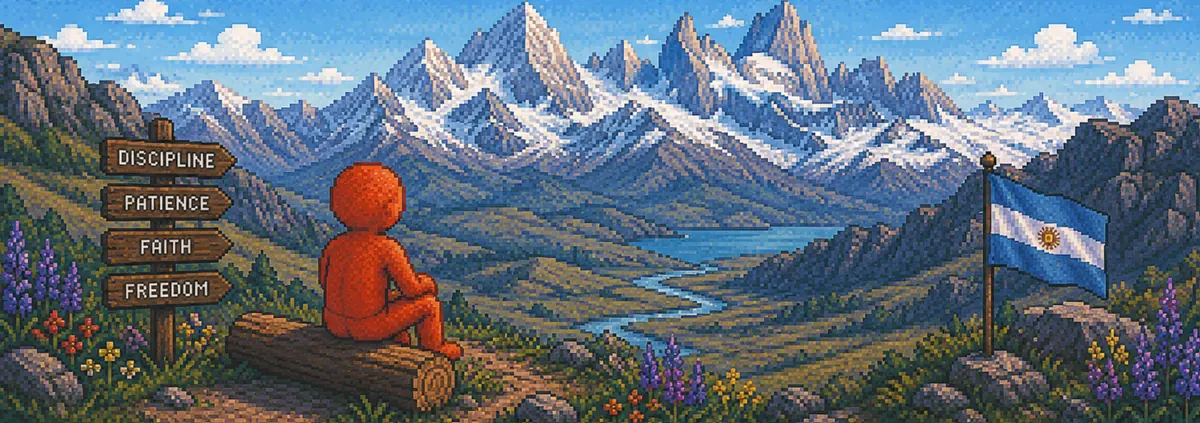
The image near the end of this essay has a signpost with four words on it: discipline, patience, faith and freedom. Each one names a part of the same practice.
Discipline is the daily part. You sit down at the desk or the workbench whether or not anyone is watching and whether or not yesterday went well. It has less to do with intensity than with coming back, day after day.
Patience is respect for time. Good work takes a while to get good, and longer before anyone notices it. Most people quit in the gap between effort and recognition, which is exactly where the results start to compound. That is one reason steady, slow work often turns out to be faster: it survives the gap.
Faith here means something practical. You trust that honest work has value before the evidence shows up, and you stay on a path you chose for good reasons instead of dropping it after one slow week.
Freedom is what the other three pay for. When you do not depend on approval, you choose what to make and when to say no.
Chasing people works differently. When you pursue someone directly, you ask for their attention before you have given them a reason. Most will politely decline, because their attention is already taken. Even when it works, the relationship starts uneven: one person wants something and the other is being asked for it.
That is why networking events often feel hollow. Everyone scans the room for usefulness. Real connections do happen there, usually when two people find they care about the same problem and forget to perform for a few minutes. Meanwhile every hour spent managing how you come across is an hour not spent getting better at the work.
Work acts as a signal. When you write an essay, build a tool, cook for friends or teach someone a skill, you show precisely what you value and how you think. People who share those values recognize it fast, often faster than they would in a conversation.
So the right collaborators tend to arrive through the work, not through introductions. Someone reads a piece you wrote three years ago and emails you because it named a problem they had been stuck on. Someone uses a small tool you built and can tell it was made with care. A neighbor sees you working the same patch of garden every evening and stops to ask about the tomatoes. Nobody targeted these people. They found you because you were standing somewhere specific.
Vague work attracts vague interest. When you commit to a particular set of questions and standards, you become visible to the few people working on nearby ones. A broad audience may never notice you. A small group of the right people will, and that is usually all anyone needs.
When anyone can produce a polished paragraph or a plausible app in minutes, polish stops telling people much. What stays rare is a point of view held over years, a body of work that keeps asking the same honest questions.
The work changes you too
Steady work makes you clearer about what you think. You stop competing for approval, so you can be glad when others do well. Most of us can tell someone who wants to be admired from someone absorbed in a craft, and the second is much easier to be around.
It also keeps you from building a life around people who were never going to stay. Learning to protect your peace from every passing demand is part of this. When you stop bending toward every opinion, you have room for the friendships and partnerships that are actually yours.
None of this means staying silent. Publish the essay, share the project and answer the person who writes to you. Early on you may need to put work out more often than feels comfortable, so that it exists outside your notebook. Later you may need long stretches without output so the next piece can go further.
You will not know in advance who the right people are. They may be older or younger than you expected, from another field or another country, and not famous at all. If you had chased the impressive names, you might have walked straight past them.
When doubt comes, go back to the four words. Check whether you kept returning to the work, whether you gave it enough time, whether you still believe your reasons for starting, and whether you are guarding the freedom that made it worth doing. If the answer is mostly yes, a slow month is not a verdict on the work.
The practice for today is small. Pick the work you would do even if nobody were watching and spend an hour on it. Make it a little better than last time, and put some part of it where someone can find it. When a person does find you through it, write back, and treat that first exchange with care.